
How to Become a Notary Public in Florida: A Complete Guide
Becoming a notary public in Florida is one of the most accessible and rewarding side careers — or full-time businesses — you can start. The requirements are straightforward, the startup costs are low, and the demand for notary services in Florida is consistently high.
Whether you’re looking to add notary services to your existing business, start a mobile notary side hustle, or build a full-time signing agent career, this guide walks you through every step.
Eligibility Requirements
To become a notary public in Florida, you must:
- Be at least 18 years old
- Be a legal resident of the state of Florida
- Have no felony convictions (unless civil rights have been restored)
- Complete a mandatory education course (more on this below)
That’s it. You don’t need a college degree, a professional license, or prior experience. The barrier to entry is intentionally low because notarization is a public service.
Step 1: Complete the Required Education Course
Florida requires all first-time notary applicants to complete a 3-hour education course approved by the Florida Governor’s office. The course covers:
- Florida notary laws and regulations
- Duties and responsibilities of a notary public
- Identification requirements for signers
- Types of notarial acts (acknowledgments, oaths, jurats, copy certifications)
- Liability and what you cannot do as a notary
- Proper record-keeping and journal practices
Most people complete the course online in a single sitting. Courses are available from several approved providers for $30–$100. You’ll receive a certificate of completion that you’ll need for your application.
Step 2: Submit Your Application
Apply through the Florida Department of State — the application is available online at notarypublic.state.fl.us:
- Complete the notary application form
- Attach your education course certificate
- Pay the application fee: $39
- Processing takes approximately 4–6 weeks (sometimes faster)
Once approved, you’ll receive your notary commission — which is valid for 4 years.
Step 3: Get Your Notary Bond
Florida requires every notary to obtain a $7,500 surety bond before performing any notarial acts. The bond protects the public — if you make a mistake or commit fraud, the bond provides financial recourse for affected parties.
Key details:
- The bond costs approximately $30–$50 for the full 4-year term — it’s not $7,500 out of pocket
- Purchase from any Florida-licensed surety bond provider
- The bond must be filed with the Florida Department of State before you start notarizing
Step 4: Purchase Errors and Omissions (E&O) Insurance
E&O insurance is not required by Florida law but is strongly recommended. While the bond protects the public, E&O insurance protects you — covering legal defense costs and damages if you’re sued for a notarization error.
- Cost: $25–$75 per year for basic coverage
- Coverage: Typically $25,000–$100,000
- Available from notary supply companies and insurance providers
If you plan to do mobile notary work or loan signings, E&O insurance is practically mandatory — most signing services require it.
Step 5: Purchase Your Notary Supplies
You’ll need the following to perform notarizations:
Required:
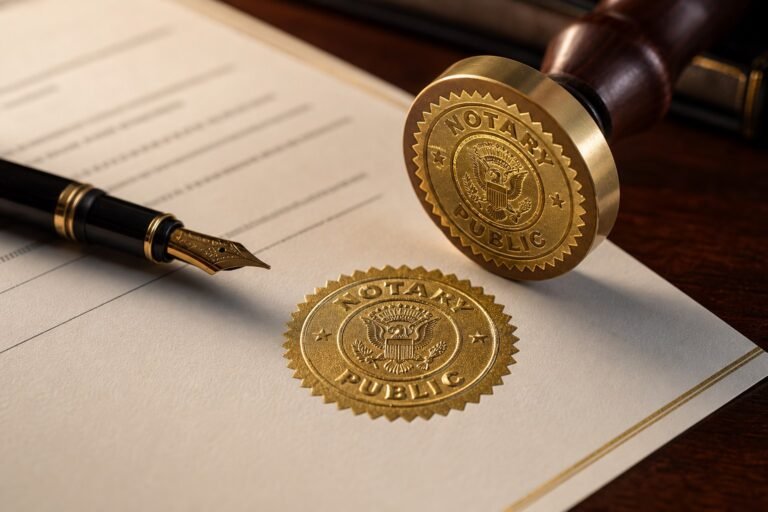
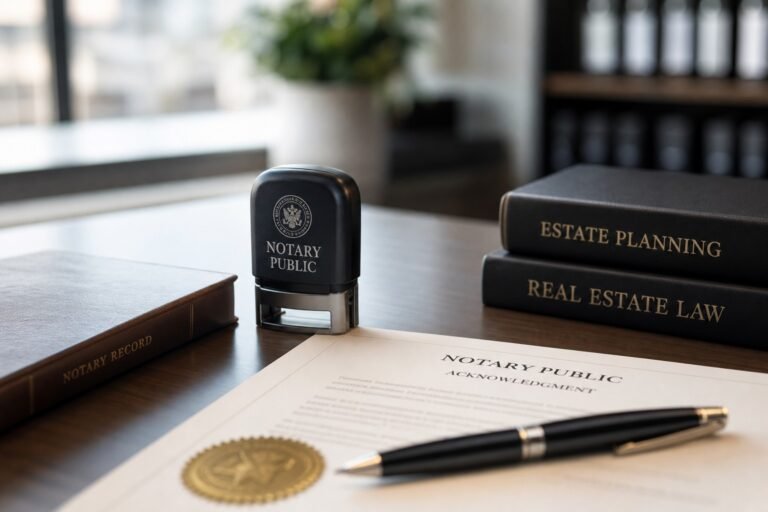
- Notary stamp (rubber or self-inking) — Must include your name, “Notary Public — State of Florida,” your commission number, and commission expiration date. Cost: $15–$35
- Notary journal — Florida doesn’t legally require a journal, but keeping one is considered best practice and is required by most signing companies. Cost: $10–$25
Recommended:
- Notary seal embosser — A raised-seal impression that’s harder to photocopy or forge. Cost: $20–$40
- Thumbprint pad — For additional signer identification on high-value documents. Cost: $5–$10
- Professional carrying case — If you’ll be working as a mobile notary. Cost: $20–$40
Total startup cost (everything): Approximately $150–$300 including the application, bond, supplies, and insurance.
Step 6: File Your Bond and Oath of Office
Before you can begin notarizing:
- File your surety bond with the Florida Department of State
- Take the Oath of Office — This can be administered by the clerk of court in your county or by another notary public
- Your bond and oath must be filed within 60 days of your commission start date
Once filed, you’re officially a Florida notary public and can begin performing notarial acts.
What You Can and Cannot Do as a Florida Notary
You CAN:
- Administer oaths and affirmations
- Take acknowledgments
- Attest to photocopies of certain documents
- Witness signatures
- Perform marriage ceremonies (yes, Florida notaries can officiate weddings)
You CANNOT:
- Provide legal advice — even if you know the answer
- Prepare legal documents for others (unless you’re also a licensed attorney)
- Notarize your own signature or documents where you have a financial interest
- Certify vital records (birth certificates, death certificates) — these must come from the issuing authority
- Notarize a document if the signer is not present or if you doubt their identity or willingness
How to Start Earning as a Notary
Once you’re commissioned, there are several paths to earning income:
Mobile notary: Charge a per-signature fee plus a travel fee. Typical earnings: $50–$150 per appointment.
Loan signing agent: Handle mortgage closings and refinances. Requires additional training and certification (NNA or LSS). Typical earnings: $75–$200 per signing, with experienced agents doing 2–3 signings per day.
Remote Online Notarization (RON): Perform notarizations via video call. Requires additional state registration and a technology platform. Growing demand, especially for out-of-state signers.
Add-on to existing business: Real estate offices, law firms, tax preparers, and insurance agencies benefit from having an in-house notary.
Ready to Get Started?
Becoming a notary in Florida is straightforward, affordable, and can be completed in a few weeks. Whether you’re looking for a side income or building a full notary business, the demand in South Florida is strong and growing.
If you have questions about the process or want to learn more about what a notary career looks like in practice, we’re happy to help.
👉 Contact Direct Inc Notary Services to learn more about notary services in Florida or to schedule a notarization appointment.
Direct Inc Notary Services provides professional mobile notary, loan signing, RON, and apostille preparation services across South Florida. Fast, accurate, and always confidential.