
Understanding Loan Signing Agent Services in Florida
If you’re buying a home, refinancing your mortgage, or closing on a real estate transaction in Florida, there’s a good chance a loan signing agent will be involved. But most people don’t know what a signing agent does — or why they’re different from a regular notary public.
At Direct Inc Notary Services, loan signings are a core part of what we do. Here’s everything you need to know about the role, the process, and what to expect.
What Is a Loan Signing Agent?
A loan signing agent is a notary public who specializes in handling the signing of mortgage and loan documents. They’re trained to guide borrowers through the closing paperwork — ensuring every document is signed, dated, and notarized correctly so the loan can fund and the transaction can close on time.
Signing agents work as neutral third parties. They don’t represent the lender, the title company, or the borrower. Their job is to facilitate the signing process accurately and efficiently.
What Does a Loan Signing Agent Do?
During a typical signing appointment, your signing agent will:
1. Verify Your Identity
Before any documents are signed, the agent checks your valid government-issued photo ID to confirm you are who you say you are. This is required by law for every notarization.
2. Walk You Through the Documents
A typical mortgage closing package includes 100–150 pages of documents. The signing agent goes through each one with you, explaining where to sign, where to initial, and what each major document represents.
Key documents you’ll encounter include:
- The Promissory Note — Your promise to repay the loan
- The Deed of Trust (or Mortgage) — The document that secures the loan against the property
- The Closing Disclosure — A detailed breakdown of your loan terms, interest rate, monthly payment, and closing costs
- The Right to Cancel (if applicable) — For refinances, you have a 3-day right to rescind
- Compliance agreements, insurance verifications, and tax forms
3. Notarize Required Signatures
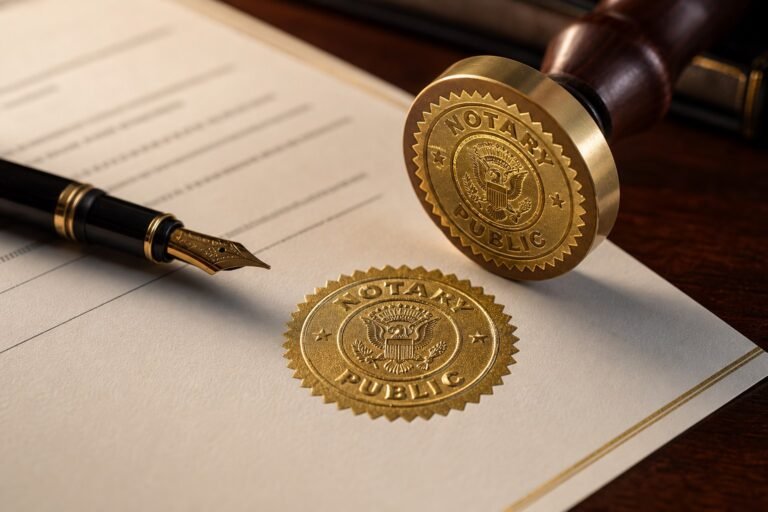
Several documents in the package require notarization — meaning the signing agent applies their official notary seal and signature after witnessing yours. This gives those documents legal standing.
4. Ensure Completeness
The agent reviews the entire package before leaving to make sure nothing is missed — no unsigned pages, no missing initials, no undated documents. An incomplete package can delay your closing by days.
5. Return Documents
After the signing, the agent returns the completed package to the title company or lender, typically via overnight courier. Speed matters — many loans have lock deadlines and closing windows.
When Do You Need a Loan Signing Agent?
Signing agents are used for virtually every type of mortgage and loan closing:
- Home purchases — First-time buyers, move-up buyers, investment properties
- Refinances — Rate-and-term refinances, cash-out refinances
- Home equity loans and HELOCs
- Reverse mortgages
- Loan modifications
- Seller-side closings — When the seller needs to sign their side of the closing docs separately
Where Does the Signing Take Place?
One of the biggest advantages of using a mobile signing agent is flexibility. Signings commonly happen at:
- Your home
- Your workplace
- A title company or attorney’s office
- A coffee shop or restaurant
- A hospital or care facility (for signers with limited mobility)
- Anywhere else that’s convenient and has a flat surface for signing
In Florida, many closings are done at the borrower’s home — especially for refinances. The signing agent brings the full document package and handles everything on-site.
How Long Does a Loan Signing Take?
A typical signing appointment takes 45 minutes to 1 hour. More complex transactions — first-time purchases with multiple buyers, investment properties, or packages with additional riders — may take up to 90 minutes.
Your signing agent will give you an estimated time when scheduling the appointment. We recommend setting aside at least an hour with no interruptions.
What Should You Bring?
- Valid government-issued photo ID for each signer — driver’s license, state ID, or U.S. passport
- A second form of ID if required by the lender or title company
- Any cashier’s checks or certified funds required for closing costs (your lender or title company will tell you in advance)
- Reading glasses if you need them — there’s a lot of fine print
Important: What a Signing Agent Cannot Do
A loan signing agent is not a real estate attorney or a loan officer. They cannot:
- Provide legal advice or explain legal terms
- Answer questions about your interest rate, loan terms, or fees — those questions go to your lender or real estate attorney
- Make changes to any documents — only the lender or title company can modify the closing package
- Pressure you to sign anything you’re uncomfortable with
If you have questions about the terms of your loan, ask your lender or real estate attorney before the signing appointment. The signing agent ensures the paperwork is executed correctly — the terms are between you and your lender.
Schedule Your Loan Signing
Whether you’re a borrower, a title company, or a lender looking for a reliable signing agent in South Florida, Direct Inc Notary Services handles signings professionally and on time — every time.
👉 Contact Direct Inc Notary Services to schedule a loan signing appointment. Same-day and evening appointments available throughout South Florida.
Direct Inc Notary Services provides professional mobile notary, loan signing, RON, and apostille preparation services across South Florida. Fast, accurate, and always confidential.