Common Notarization Mistakes and How to Avoid Them
Getting a document notarized seems simple — until something goes wrong. A single mistake can result in a rejected document, a delayed real estate closing, a denied court filing, or a wasted trip to the notary’s office.
At Direct Inc Notary Services, we see the same mistakes repeatedly. Here are the most common notarization errors — and how to avoid every one of them.
1. Signing the Document Before Seeing the Notary
This is the number one mistake. Many people sign their documents at home and then bring them to the notary expecting a stamp and seal. But that’s not how notarization works.
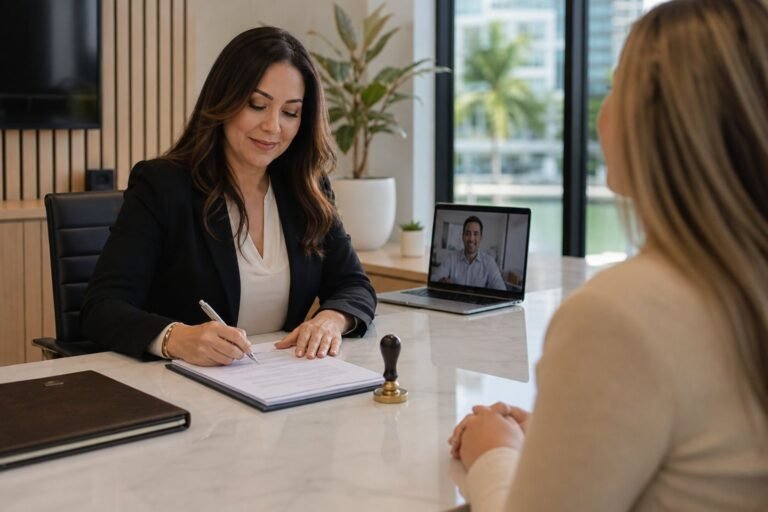
The rule: A notary must witness you signing the document. If you’ve already signed it, the notary cannot legally notarize that signature. You’ll need to get a new copy and start over.
How to avoid it: Bring the document unsigned. Sign it in front of the notary during the appointment. If you’re mailing the document to someone for notarization, make sure they know not to sign it until the notary is present.
2. Bringing the Wrong ID
Florida law requires the notary to verify your identity using specific forms of identification. Not all IDs are accepted:
Accepted IDs in Florida:
- Florida driver’s license or state ID card
- U.S. passport or passport card
- Driver’s license or state ID from another U.S. state
- U.S. military ID
- Foreign passport
NOT accepted:
- Expired IDs (any type)
- Student IDs
- Employee or work badges
- Credit cards or debit cards
- Social Security cards
- Gym memberships or store loyalty cards
How to avoid it: Bring a current, unexpired government-issued photo ID. If your license is expired, renew it before your notary appointment — or bring your passport as an alternative.
3. Not Having All Signers Present
If a document requires multiple signatures, every signer must appear before the notary — either at the same appointment or in separate sessions. A notary cannot notarize a signature for someone who isn’t physically present.
Common scenario: A married couple needs to sign a deed. One spouse signs at the appointment, and the other says they’ll “sign later.” The notary can only notarize the signature they witness. The absent spouse needs their own notary appointment.
How to avoid it: Coordinate schedules so all signers can be at the same appointment. If that’s not possible, each signer needs a separate notary session — or consider Remote Online Notarization (RON), which allows each signer to join a video call from different locations.
4. Using White-Out or Making Alterations
Any visible alterations to a document — white-out, crossed-out text, handwritten additions, or correction tape — can make a document invalid for notarization. Altered documents raise questions about whether the original terms were changed after signing.
How to avoid it: If there’s an error on the document, get a corrected version printed before your notary appointment. Do not attempt to correct errors on the document yourself. For minor errors that can be corrected at the time of signing (like a misspelled name), the notary can add an initialed correction — but only if both the signer and the notary agree it’s appropriate.
5. Missing Pages or Incomplete Documents
Bringing a document with missing pages, blank required fields, or unsigned witness lines creates problems:
- The notary may not be able to determine what they’re notarizing
- Incomplete documents may be rejected by the receiving party (court, lender, government agency)
- Missing witness signatures may need to be obtained before notarization can proceed
How to avoid it: Before your appointment, review every page of your document. Make sure all fields are filled in (except the signature — leave that for the notary appointment). If witnesses are required, arrange for them to be present at the signing.
6. Not Knowing What Type of Notarization You Need
Florida recognizes several types of notarial acts, and using the wrong one can invalidate your document:
- Acknowledgment — The signer declares they signed the document voluntarily. Most common for deeds, powers of attorney, and contracts.
- Jurat (sworn statement) — The signer swears under oath that the contents of the document are true. Used for affidavits and sworn declarations.
- Oath or affirmation — A verbal pledge of truthfulness, often combined with a jurat.
- Copy certification — The notary certifies that a copy of a document is a true copy of the original.
How to avoid it: Check the document’s instructions or ask the requesting party what type of notarization is needed. A good notary will also identify the correct notarial act based on the document’s language.
7. Forgetting About Witnesses
Some documents — particularly wills, healthcare directives, and certain real estate documents — require witnesses in addition to notarization. The witnesses must be present at the signing and must also sign the document.
Florida requirements:
- Wills require two witnesses (Florida Statute §732.502)
- Healthcare surrogates require two witnesses
- Some real estate documents require witnesses depending on the transaction
How to avoid it: Check whether your document requires witnesses and bring them to the appointment. The notary can serve as one witness in some cases, but not all. When in doubt, bring two people who are not parties to the document.
8. Notarizing a Document That Will Be Rejected
A document can be properly notarized and still be rejected by the receiving party if it doesn’t meet their specific requirements. Common rejections:
- The receiving country requires an apostille in addition to notarization
- The lender requires a specific notary certificate wording
- The court requires an original document, not a copy
- The document is in a language the notary doesn’t understand (the notary must be able to communicate with the signer)
How to avoid it: Before your appointment, check with the organization that will receive the document. Ask them exactly what they require — type of notarization, specific wording, number of copies, apostille, etc.
Get It Right the First Time
The easiest way to avoid notarization mistakes is to work with an experienced, professional notary who knows the common pitfalls and guides you through the process.
👉 Contact Direct Inc Notary Services to schedule your notarization appointment. We’ll make sure everything is done correctly the first time — no wasted trips, no rejected documents.
Direct Inc Notary Services provides professional mobile notary, loan signing, RON, and apostille preparation services across South Florida. Fast, accurate, and always confidential.